
Brushstroke Technique: How to Add Texture and Energy to a Painting The Power of Brushwork
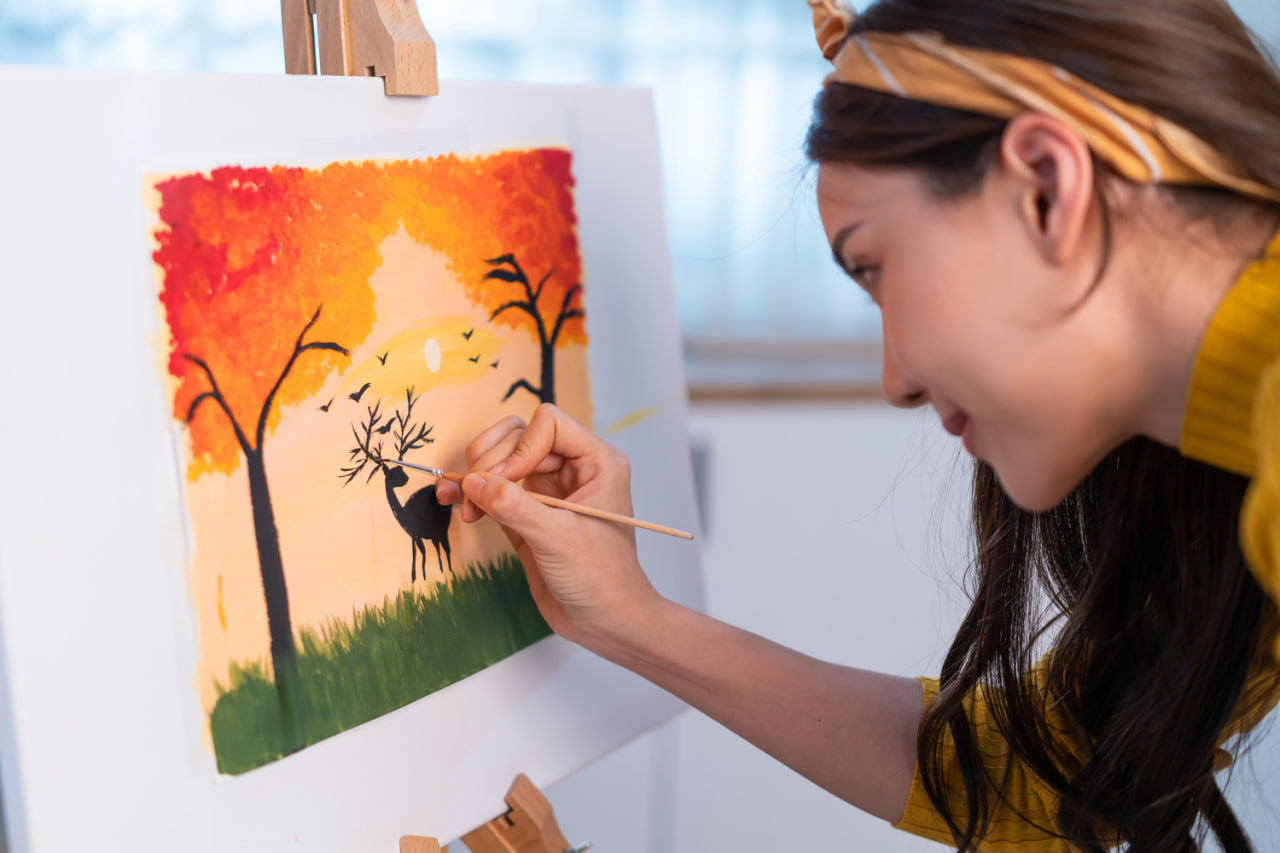
The brush stroke is one of the most powerful expressions of painting. It not only involves the application of paint to canvas, but texture, movement and feeling. The brush stroke expresses the personality and approach of the painter as well as the power, movement and three-dimensionality of the painting. An understanding of brushwork empowers the artist to create complex and intriguing images that command the viewer’s interest.
By mastering brushstrokes, artists can control light, volume, texture, as well as express motion and character through each brush mark.
There are various types of brushes, each serving a specific purpose.
Because different brushes give different results, select a brush that will give you the texture or gesture you need.
Round Brushes Round brushes have a point at the end which makes it great for detail, lines and precise strokes. They can be used for thin lines or broader strokes.
Flat Brushes. Flat brushes have a flat, square brush tip and are used to produce broad brushstrokes, to cover large areas, to create sharp lines, to blend and layer broad areas of color.
Filbert Brushes: A mix of flat and round brush, filbert brushes provide a soft, curved stroke. Great for blending and for rounded subjects such as flowers, clouds, or even the skin.
Fan Brushes. A fan brush creates a thin, fanned out line of paint that works well for suggesting grass, fur, leaves, or blending softly.
Detail Brushes: These are used for small details, highlights and subtle texture and are also an important part of a realistic painting.
Adding Texture Techniques
Brushstrokes are important for creating texture, which provides dimension and visual appeal to a painting.
Grass. Dry brush. Dry brush with very little paint gives a scratchy, rough stroke. Good for wood, stone, or roughened surfaces.
Impasto This is paint applied thickly, with bold brush strokes, where the paint itself is raised from the surface of the canvas. This gives the painting a three-dimensional effect.
Scumbling: applying a thin layer of opaque or semi-opaque paint over previously painted and dried area to give texture and interest.
Stippling Dots or small dabs of paint can create texture, like leaves, sand, or any other bumpy texture. Dot size and distance from each other are used to create values.
Sgraffito. Use a tool or the back of the brush to scratch through to lower layers in a wet painting and create patterns or textures.
The application of brushstrokes
In addition to texture, brushstrokes can imply movement and direct the eye.
Directional Strokes: Brushstrokes can represent the flow of water, wind or fabric. Stroke direction helps create a realistic and energized look when moving in the same direction as the action.
Pressure Variation
Soft pressure gives fine, subtle lines. Hard pressure gives strong, confident lines. The variation of pressure in a piece creates energy and pulse.
Layering and Rhythm: By applying strokes over each other at different angles and stroke weights, a visual rhythm is established. This helps show energy and movement, and helps give the work a living quality.
Movement and gesture: Sometimes used in abstract or impressionist styles, movement and gesture are indicated by loose brushstrokes which give a sense of dynamism. Big, sweeping brushstrokes are dramatic and elegant, while softer, more fluid strokes convey a sense of flow and elegance.
We can join the two techniques together and paint both with the brush and with color.
Subtly added color strengthens the texture and motion.
Blending
Soft brushstrokes that allow one color to smoothly transition into another. Useful for creating depth and slight transitions in form. Necessary for creating skin tones, skies, and other gradient effects.
Contrast. Varying brush strokes with contrasting colors will bring attention to areas you want to emphasize. A rough texture in a dull color will make smooth, colorful areas stand out.
Glazing: Using transparent washes of paint over impasto work to allow the brushstrokes to remain visible, thus creating depth and luminosity.
Brushwork Skills Drills
Strokes Practice and Control. Do some lines at different pressure, angles and speed. Try round, flat and filbert brush. Try to understand how they react.
TEXTURE STUDIES
Dry brush, stipple, and scumble to paint surfaces such as wood, stone, cloth, and leaves. Attempt realistic texture, but strive for expression.
Movement Sketches: Fast gesture studies of water, trees, or figures can be useful for practicing fluid brushstrokes and the rhythms in your strokes.
Layering Exercises: Use different brush strokes, line weights, and layers of opacity to experiment with the relationship of brushstrokes to color and to depth.
Common Issues and Resolutions
Stiff or Uniform Strokes Practice direction, pressure and brush type to achieve natural and lively textures. Do not repeat the same movement mechanically.
Too much texture
You can overdo texture by applying too many layers or disturbing it too much. Check your progress frequently to keep it sharp.
Chaotic Strokes: If strokes seem chaotic, decide on the direction you want them to flow and emphasize rhythmic gesture. Start with light gestural strokes and then add bold strokes.