
Arranging Objects for Maximum Effect An Introduction to Composition in Art
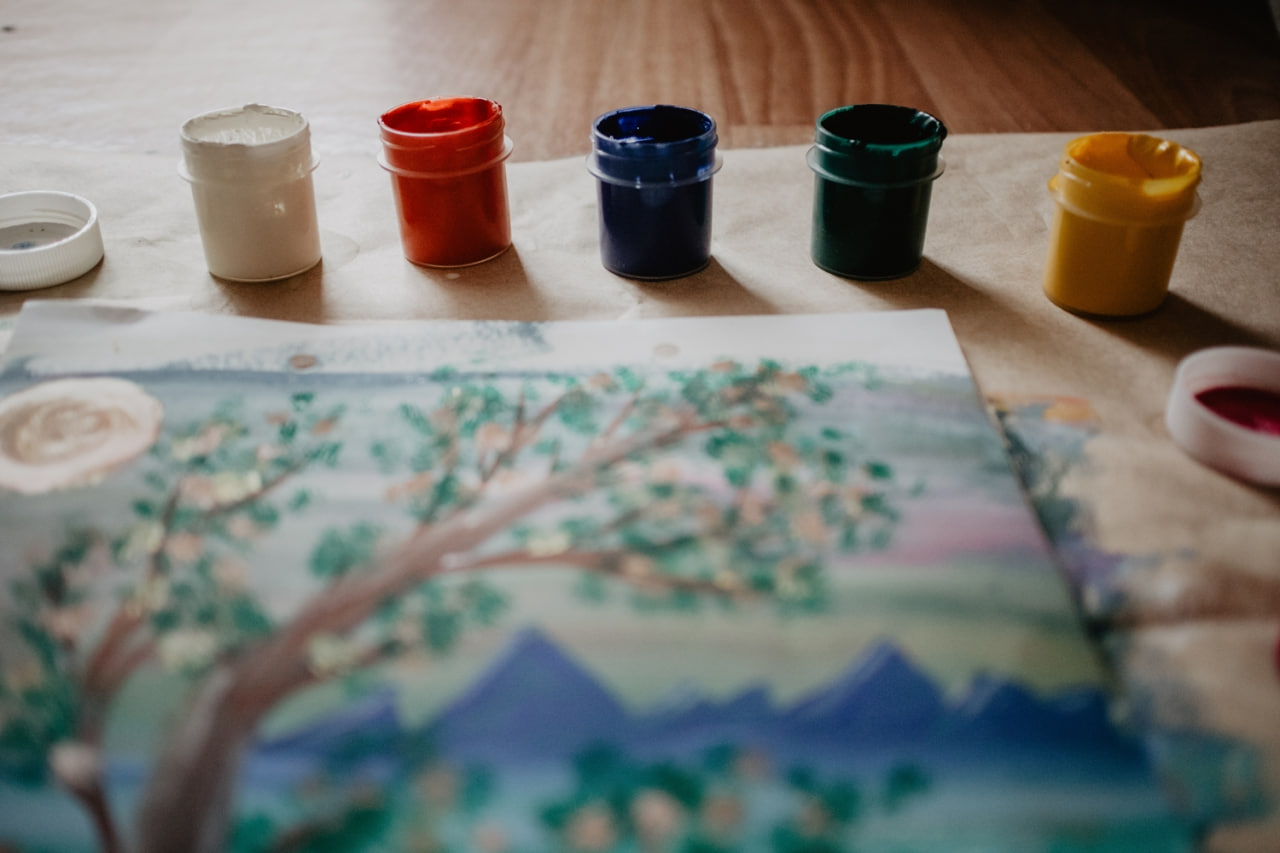
One of the most essential elements in painting is the composition. This is how you arrange different items in your painting and also how you direct the viewer’s gaze across the canvas. When the composition is good, it balances, harmonizes, and communicates the message of your painting well. Poor composition leads to a dull and or busy painting regardless of the artistic skills employed.
Knowing the rules of composition helps an artist to consciously construct an image so that it successfully communicates a message to the viewer.
The Rule of Thirds is a technique used in photography and other visual arts to balance the composition of a picture. The rule states that an image should be divided into thirds both horizontally and vertically, and that important elements should be placed along those lines or at their intersections.
Possibly the most well-known of all compositional guidelines is the rule of thirds.
The Rule of Thirds
Divide your canvas into thirds like a tic-tac-toe board. Using the lines as guides, position interesting parts of your painting on those lines or where they intersect.
Key Points Placing your subject on one of the intersections will make the eye naturally gravitate toward it. It also ensures that your painting doesn’t look too central or stagnant.
Balancing & Movement: Secondary design elements should guide your viewer around the painting while balancing the piece. Rule of thirds helps the viewer stay interested.
“Leading Lines and Direction”
Lines direct the viewer’s eye and give a painting a sense of movement and organization.
Natural Lines: A path, a river, tree branches, and even architectural features can all be leading lines. They guide the viewer’s eye to your subject or lead them through your image.
Diagonal and Curved Lines
Diagonals create dynamic tension, suggesting movement and energy. Curved lines add rhythm and softness, guiding the eye gently through the scene.
Implied Lines These lines are invisible but are created by the positioning of elements that also help to define the structure of a composition, including shapes, value and color contrasts, or a series of dots and dashes.
Balance and Symmetry.
Balance refers to a sense of stability in the painting, either symmetrical or asymmetrical.
Symmetrical Balance: Things are arranged equally on both sides of a central line. Symmetry suggests stability, serenity, and formality. It is often used in portraits and in architectural renderings.
Asymmetrical Balance: When the visual weights in a composition aren’t evenly distributed it can be very interesting and still be balanced. For example, a heavy element on one side can be balanced with several lighter elements on the other.
Visual Weight. The color, size, texture and contrast of a visual element can create visual weight. Balance this principle by using these characteristics to attract attention to certain elements.
Understanding how your photo will be cropped is important. In other words, the frame of your image. You can create depth by blurring distant objects or using other elements to create layers.
Adding layers and creating depth can improve your photos.
Foreground, Middle Ground, Background: Separate your composition into foreground, middle ground and background to create a sense of distance. The foreground can be larger and more defined, and the background can be more blurred.
Overlapping Objects Overlapping objects imply a sense of depth, emphasize the connection between subjects, and ensure that the image doesn’t appear two-dimensional.
Atmospheric Perspective Distant objects will tend to be lighter, cooler, and less defined. Atmospheric perspective will help create a believable image and help lead the viewer’s eye.
Key Points and Focus
Having a focal point provides a point of interest for your audience and explains your photo.
Contrast: Color, value, or texture contrast to draw attention to the focal point. The viewer’s eye is drawn to bright or highly saturated areas.
Isolation Placing the subject against a simpler background or using negative space can make it stand out.
Leading lines, gaze, or implied movement toward the focal point reinforces its importance and creates visual storytelling.
Rhythm and Repetition
In music, rhythm refers to the recurrence of certain values to produce motion and coherence.
Motifs & Patterns. Repeating elements such as shape, color, or texture help to lead the viewer’s eye through the composition and unify the painting.
Repetition and variation. Repetition can be combined with variation to prevent visual monotony. Different sizes of circles can be used to represent rhythm.
Avoiding Composition Issues
Overcrowded. A mess of elements vying for attention. Help your viewer by identifying your subject and sub-elements.
FLAT COMPOSITION The painting appears 2-D. Establish a foreground, middle ground, and background to create a hierarchy of space.
Inconsistent Visual Weight
When objects are placed in an odd or mismatched manner, it causes a sense of imbalance. Modify the size, color, or placement of an object to create balance.
Activities to Develop Your Compositional Skills
Thumbnail Sketches. Little fast sketches done in order to try out various compositions before deciding on your final piece. They help you to evaluate balance, center of interest and movement.
Single-Concept Exercise
Create compositions with a focus on one principle at a time — rule of thirds, leading lines, asymmetry, etc.
Research Masterworks
Investigate the way the components are placed and organized in paintings by other famous artists. Look at their techniques of establishing depth, using triangles and lines to move the eye through the work. Recreate their compositions as a way to learn how to do this.
Play With Crop
Adjust your image to different dimensions or crop out part of your subject to explore the effect of different compositions on focal points, balance and flow.